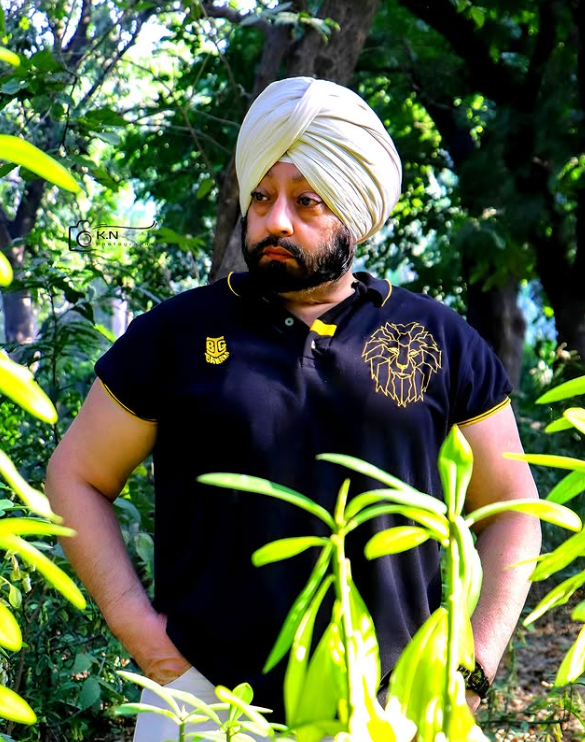
Interview

Rupinder Khurana: Do what you love, be aware of your environment, and learn to realize when you need a break and take it.

Rupinder answers all of your questions related to modeling and her future goals

Q. Tell us an interesting thing about yourself:
- I have been following the fashion industry from quiet some years. It was then I decided to take actual part
into this industry and decided to walk the ramp at my present age of 43.
According to me this is my strength but some of the fellow folks consider this as an obstacle and I have got
many negative feedback about this. Many people said that you will never be able to establish yourself into
this industry.
However, it was then I decided to turn this negativity into positivity. I enrolled into many fashion shows and
actively took part in the designer shoots and ramp walks. Gradually the people who gave negative feedback
started to appreciate my efforts and took this into positive aspect and gave much encouragement.

Q. How was the experience of your first shoot:
- During my first shoot I was very nervous and going through mixture of emotions.
It was nerve-wracking, but it was also a great learning experience. I made some mistakes during the ramp
walk and then my choreographer advised that It's normal to make mistakes when you're first starting out.
Secondly a feeling of being alone since it is the first time. And later I was happy that the client for whom I
am modelling is very happy with the results.

Q. Who do you consider to be the world's most successful model:
- Kendall Jenner is considered the world's most successful model due to her high earnings and media
presence.

Q. Is there a brand or designer you aspire to model for:
- If down the line I am offered a choice and work I would definitely like to model for the Manyavar brand and
also for Tarun Tahiliani designer for the sherwani collection

Q. Do you model freelance or full-time:
- Well the modelling is my hobby and passion. However, at present I am also occupied with some other work,
but down the line with the growth of technology, recognition and globalisation in the fashion Industry, I plan
to take this into as my full time career.

Q. What is the most famous brand you have modeled for:
- I have not yes given a chance to model for any brand as yet as this is my step into the fashion industry.
However, I have done modelling for many designers such as Dushyant Gujjar and also done a Pageant show
for Nav Drishya Productions.

Q. How do you want to grow as a model:
- There are some of the steps that can be incorporated in order to grow as a model:
1. Decide what kind of model you want to be. ...
2. Start practicing at home. ...
3. Train and exercise. ...
4. Build your portfolio. ...
5. Take relevant classes. ...
6. Look for opportunities to be noticed. ...
7. Use social media.
8. Do Networking

Q. What is the toughest part of a model's job:
- Modelling can be challenging in many ways, including the following:
Physical demands: Models can experience long hours, strenuous work, and constant travel, which can
affect their physical health.
Mental health: Models can face pressure to maintain an unrealistically low weight, which can lead to
unhealthy eating habits and eating disorders. The constant scrutiny of their appearance can also lead to a
negative self-image.
Hectic lifestyle: Models can have hectic lives, with routines that include daily meetings, frequent
photoshoots, strict diets, and exercise regimens.
Competition: Modelling can be a competitive profession.
Balancing other commitments: Models may need to balance modelling with other commitments, such as
university or a part-time job.

Q. How far are you willing to travel to do a photoshoot:
- Photoshoot like all the other professions is a serious profession and travelling is a mandatory feature for
this profession.
I am fully prepared and committed to travel to domestic / international and far of locations for wherever
this work is entrusted to me.

Q. What fashion styles and designs do you like:
- My choice is always traditional Indian wear, Punjabi traditional wear. I have already done modelling for the
sherwani collection

Q. Where do you see the fashion industry in five years:
- The fashion industry in the present era is doing wonderful and working globally, however in the next five
years according to me the fashion industry is expected to evolve in the next five years, with sustainability,
technology integration and innovation.

Q. What are your professional and career goals:
- This is my first step into the field of modelling. Having done some of the designer shoots and ramp walks
for Designer Dushyant Gurjar and also Nav Drishya Productions, My aim and focus at this point of time is to
establish my profile professionally in this fashion industry and work with top designers.

Q. What is your greatest strength or weakness:

  • My strengths are:
    Effective communication
    Attention to detail
    Adaptability
    Teamwork
    Problem-solving
    Time management
    Relationship building
    And my weakness:
    I am a punctual person and always complete a given work on time. I tend sometimes to get cross or
    sometimes irritated with the team or any specific person If I find that the work is not completed on time.

Q. Why did you become a model:
- Modelling has always been my passion. I choose this career for the following reasons:
Creative outlet: Modelling can be a way to express creativity and be involved in artistic productions.
Self-confidence: Modelling can help people gain confidence and overcome insecurities.
Travel: Modelling can provide opportunities to travel and experience different cultures.
Meeting people: Modelling can provide opportunities to meet people from different backgrounds and
cultures

Q. Have you worked as an art director during a shoot:
- As yet I have not been given this opportunity to work as art director during the shoot.

Q. What do you expect from a photographer:
- A photographer is the primal point of interaction and a good photographer conveys his thoughts through his
clicked images. A good photographers should be punctual, organized, and respectful. They should also be
transparent and maintain and should have an open communication with the models or the subject they have
to shoot with their camera.

Q. How can a model follow the guidance of directors:

  • Here are some tips for models to follow the guidance of directors:
    Find a good position and more importantly find a place to stand that allows the model to follow the action
    and make corrections after each take. Stay in that position until the end of the shoot.
    Avoid standing between the director and the camera or the director and actors.
    Embrace a growth mindset and be open to learning and improving. Don't be afraid to try new techniques or
    something outside of your comfort zone.

Q. What kinds of clothes and accessories are the easiest to model:
- Casual clothes such as Tshirt and Jeans

Advertisement

Q. Do you prefer a live fashion show or on-site photoshoot:
- My first choice will be live fashion show, where there is the opportunity to meet other fellow models, get to
know their experiences and any new references that they can provide for any upcoming fashion show.

Q. Is it important for models working together to be friends:
- Yes it is very important for the models to be friends as this gives confidence working as team and bring out
best in the question answer round in front of judges and while performing the ramp walk. Also the models
who are friends can give reference of any other shoot or any other fashion show.

Q. What would you say to models who are just starting their careers:
- According to me there are some of the pointers for the aspiring models some of these pointers are:
1. Understanding of the fashion industry. This is not a shortcut to name and fame.
2. Preparing for work. The upcoming model has to prepare and work hard to establish in the fashion
industry.
3. Practice self care. The aspiring model male or female has to practice self care and take care of their
emotional and physical health.
4. Be confident: An aspiring or upcoming model should display confidence and interact with other models.
5. Be versatile: An upcoming or a fresher model should demonstrate versatility by being able to model
different clothing and connect with the photographer, judges and audience.
6. Be aware of the hours: It is for the fresher models to understand that the shoots can vary from before
sunrise to after sunset. So they have to adjust and adapt to the work timings

Q. Explain the biggest obstacle you have faced in your modeling career so far. How did you overcome it:
- I am modelling on the ramp at the age of 43. According to me this is my strength but some of the fellow
folks consider this as an obstacle and I have got many negative feedback about this.
However, it was then I decided to turn this negativity into positivity. I enrolled into many fashion shows and
actively took part in the designer shoots and ramp walks. Gradually the people who gave negative feedback
started to appreciate my efforts and took this into positive aspect and gave much encouragement.

Q. Do you think training is necessary for modeling:
- Yes of course training is the primitive requirement for modelling. A model before walking the ramp has to
undergo a session of choreography and should know the basics of walking the ramp and also some of the
basics of knowledge in order to answer the questions of the judges during the pageant.

Q. Describe the most challenging photoshoot you have been a part of:
- One of the most challenging photoshoots I've been part of was shooting for the sherwani collection with
Ludhiana Talkies. This was my first time and even when I got training on how to pose I made some silly
errors. But The photographer and the production team were very patiently adjusting to my errors. I was dead
nervous but at the end the shoot was fine

Q. How do you incorporate feedback into your work:

- By taking, understanding and incorporating the positive and negative feedback of the photographers,
choreographers and Directors and thereby improving the quality of my work.

Q. Name the three most important traits of a model:

- Some of the most important traits of a model are:
1. Confidence: Models need to be confident in their abilities and trust themselves to go after the jobs they
want. They should be able to handle rejection and criticism well.
2. Patience: Models need to be patient because they may have to hold a pose for a long time or wait around.
3. Persistence: Models need to be persistent and show passion to stand out. They should be able to move
forward and keep going, even if they don't get the casting they want.

Q. Have you ever quit a photoshoot or live show:
- Never

Q. How do you usually get work and assignments:
- Through networking, attending many fashion shows, talking with other fellow models and also approaching
the designers for work etc

Q. Is it important to network to succeed as a model:
- Absolutely yes. Yes, networking is very important for a model's success. Networking can lead to new
opportunities and bookings by helping you connect with industry professionals. Networking events like
fashion shows and casting calls are great places to meet professionals and show off your talent.

Q. How can models look after their mental health?
- Modelling full time can be a very stressful and challenging job. Following are some of the pointers on how
the models:
1. Try not to compare yourself to others. Our clients seek a range of models to take part in their
commercials, campaigns and promotions. As a result, we want people of all shapes, sizes, ages and looks.
Be proud of the way you look and give it a go!
2. . Expect to have stretches of time where you are not offered assignments.
3. Making sure that the models eat, sleep and exercise in a regular, balanced and healthy way. Keeping in
good physical shape will have an impact on the mental health.
4. Ensuring that the professionals give quality time for some of the pleasures in life, whether that is
spending time with friends, and family, indulging in favourite pastimes.
5. The professional has to be kind to himself / herself: aim high but don’t set unachievable goals. Remind
yourself that everyone fails sometimes and that no-one has a perfect life, despite outward appearances.
6. If you do feel low for any prolonged periods of time, share with friends and family. It helps to talk about it,
and we all need support from others. Don’t be worried about asking for professional help. Sometimes a little
advice and support from the experts can be exactly what you need to help you get back on track and to start
feeling better about life in general.

Q. What is your view of sustainable fashion?

  • Sustainable fashion is a movement that aims to reduce the environmental and social impact of the fashion
    industry. It involves using eco-friendly materials, promoting fair labor practices, and designing clothing to be
    long-lasting and easily repaired.
    According to me this fashion trend has to incorporated more and more for the preservation of the planet
    and also for promoting fair labor practice.

Q. Name one designer who revolutionized the fashion industry and explain why.
-According to me Neeta Lulla has been a costume designer, fashion stylist, and role model for hundreds of
new entrants into the fashion industry in India for over two decades. She is one of India's most well-known
and respected fashion designers. She has designed and styled clothing for high-end clients.

Q. What are your thoughts on plastic surgery?
- Plastic surgery, like any medical procedure, has its pros and cons. While it can offer significant benefits,
such as enhanced physical and mental health, increased self-confidence, and improved quality of life, it is
essential to approach it with realistic expectations and careful consideration.
According to me God has blessed us with beautiful; bodyline. It is not right to make amendments in the
body structure just for some financial gains.

Q. What homework and preparation do you undertake before a new assignment?
- As mentioned in one of the above answers
1. Decide what kind of model you want to be. ...
2. Start practicing at home. ...
3. Train and exercise. ...
4. Build your portfolio. ...
5. Take relevant classes. ...
6. Look for opportunities to be noticed. ...
7. Use social media.

Q. What makes a model different from a supermodel?
- The main difference between a model and a supermodel is the level of fame, recognition, and prestige they
have achieved in the fashion industry.

Q. What would you do if you disagreed with the photographer or director?
- If I ever disagree with the photographer or director, instead of jumping to conclusions I would like to
exercise the following pointers:
Communicate respectfully: explain my reasoning also ask them what they like or dislike about my work, and
what they would like me to change.
Avoid raising a disagreement when the other person is busy or stressed. Instead, find a time when both of
me and the photographer or director can give the topic your full attention.
Work together to find a course of action.
Provide options that show how the resolution might go either way.
And last but not the least
Hear both sides of the story before taking any action or before jumping to any conclusions

Q. Choose your favorite picture from your portfolio and explain your choice.
- My favourite picture in my portfolio are my pics with the traditional sherwani collection. The reason is
simple. This dress gives me a power, this is a royal dress and this is its own style statement.

Q. How can models support each other in their career development?
- As I have mentioned in the earlier answer the models can be in touch with each other not only during the
show but even after the show and this gives confidence working as team and bring out best in the question
answer round in front of judges and while performing the ramp walk.
Also the models who are friends and who support each other can give reference of any other shoot or any
other fashion show

Q. Are there specific clothes you want to model or avoid?
- I would want to model for the traditional Indian gents wear. Preferably for the sherwani and other princely
collection.

Q. How long was the contract with your last agency?
- At present I am not into any contract with any agency and have been modelling as freelancer with the
agencies.

Q. What is the best and worst aspect of the fashion world?
- The fashion industry has both positive and negative aspects, including:
Environmental impact: The fast fashion industry uses a lot of water and resources, and the production of
cotton and other materials has negative environmental consequences.
Social impact: Garment workers in some places lack access to clean sanitation and hygiene facilities. The
fashion industry can also involve long hours, unpaid overtime, and negative feedback.
Fast fashion: Fast fashion has made it easier for consumers to buy trendy clothing at low prices, but the
environmental and social cost is high. The fast fashion model has led to a high turnover of fashionable
clothing, which has a devastating environmental impact.
Technology: Technology can help make the fashion industry more sustainable.

Q. Is fashion art?
- Any clothing you wear or create can be considered a form of self-expression; therefore, it can be considered
art.

Q. What is your favorite fashion magazine and why?
- Vogue is my favourite fashion magazine because it covers a range of topics including celebrities, culture,
cosmetology, and the world around us. Vogue India is known for its interviews with celebrities and athletes,
and for breaking down fashion and lifestyle trends

Q. What is couture?
- According to me Couture is the business of designing, making, and selling fashionable custom-made
clothing.

Views: 0